
Manifesto
Post the Founding Statement in Type
A brand-new studio opening tweet lands harder when the card is one uncompromising headline, black on newsprint.
Heavy borders, offset shadows, exposed grids, and one violent neon accent — the direction that broke the AI-generic look and became the default for teams that want to stop the scroll.
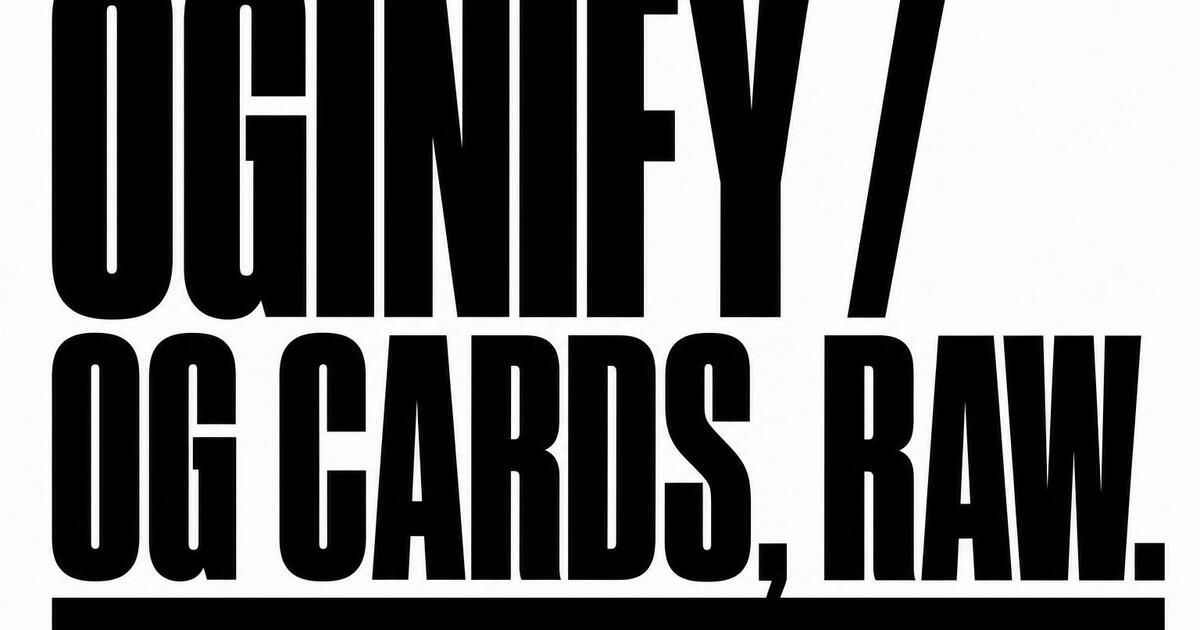
Brutalist is the look that broke the AI-generic feed in 2026 — Linear's launches, Vercel's product posts, half of Hacker News's most-shared cards. Below: what defines it, who's already shipping it, and why it's a different animal from neo-brutalist.
Heavy 3–6px black borders, hard flat shadows with zero blur, one saturated neon accent (yellow, lime, or magenta) doing the entire color job, max-weight black headlines stretched edge-to-edge, raw system or default web fonts, and grids that deliberately break — content shoves against margins instead of breathing inside them.
Gumroad leans on raw blocks and oversized type across its product pages. Bloomberg Businessweek covers turn each issue into a brutalist poster. Balenciaga and MSCHF use stripped HTML as a fashion statement. Awwwards' brutalism collection and Are.na's interface both treat constraint as the aesthetic.
Same skeleton — black borders, flat shadows — opposite temperature. Brutalist is raw: black canvas, one neon, no comfort, designed to confront. Neo-brutalist swaps the black for cream, the neon for pastel sticker blocks, and adds tilted ★ badges. Pick brutalist for manifestos and shock launches; pick neo-brutalist for product-led growth pages that still want to delight.
Launch · winter drop
A launch link only gets one impression in feed — it either stops a thumb or it doesn't. Brutalist makes that impression unambiguous: max-weight headline, a single neon accent block, a date stamp so the announcement reads as time-bound. Pair it with a launch headline that is itself a verb ("Winter Drop", "Series A", "v3 is out") and the card behaves like a stage cue.
Manifesto · we build in public
Manifestos need to read as confident, not corporate. Brutalist's stark black ground, white display type and exposed grid construction signal a stance, not a sales page. Use it for "we believe", "we ship in public" or "the new way to ___" posts — anything where the headline is a position, not a product update.
Changelog · shipped this week
Brutalist's modular grid is the rare style that makes a list of version numbers feel like a poster. Version tiles, one highlighted with the accent color, a tight monospace subtitle — engineers recognize the format instantly.
Portfolio · studio / folio 2026
Studios live or die on the share image — it's the only sample a stranger sees before they click. Brutalist's split-layout, italic serif display on the left plus a violent accent block on the right reads as confident and design-forward without saying the word "design" anywhere.
The style is loud on purpose. Ship it where the volume works for you, not against.
Manifesto
A brand-new studio opening tweet lands harder when the card is one uncompromising headline, black on newsprint.
Zine
Weekly zine formats — issue 041, issue 042 — earn recognizability from the brutalist frame across every share.
Changelog
A raw grid with the version tag and one headline change reads louder than a rendered laptop mockup.
Community
Solo makers running weekly drop rituals reuse the poster format so every share reads as one campaign.
Brutalist share cards trade polish for presence — heavy type, exposed grid, one loud color — so the frame reads as an object, not a slide.
Pick one condensed sans or slab at 120px+; brutalist H1s carry the composition, so weight and tracking do the work color usually does.
Show baseline lines, column rules or crop marks as visible chrome; the grid is the ornament in a style that refuses ornament.
One saturated accent against black or paper — no gradients, no soft shadows. Brutalism reads because it commits to two decisions.
Swiss minimalMagazine editorialTerminal / CLINeo-brutalistText overlayCinematicCollageRisograph
High-contrast slab OG cards with oversized type and raw grid layouts.
Brutalist cards use high-contrast color slabs (usually black on white or one saturated color), oversized display type set close to the edges, and a raw grid with visible structure. Nothing is smoothed — no rounded corners, no soft shadows, no gradient. Every element earns its space by being aggressive.
When your brand's audience notices design and the feed is dominated by soft/rounded gradients — indie SaaS, opinionated dev tools, editorial publications, creative agencies. Brutalist earns the click by being visually loud in a scroll where every other card looks the same soft gradient.
Balenciaga.com, Bloomberg Businessweek, Craigslist (unintentional but canonical), Zora, Are.na, Party Round, Hyperlink Academy — plus most opinionated indie SaaS launched in the last three years. Search their homepage HTML for og:image and you'll see the pattern.
Usually yes. B2B buyers pattern-match soft/rounded on 'trustworthy corporate' — brutalist reads as 'too weird to procure'. The exception is dev-tool B2B (Retool, Turso, Neon's early cards), where the audience actively rewards visual opinion. Test with your specific ICP before committing.
Brutalist is severe — usually black-on-white, no color accent, sharp corners, uncomfortable spacing. Neo-brutalist adds cream backgrounds, sticker highlights, tilted price tags and a color accent (usually yellow/orange). Neo is warmer; classic is colder. See /styles/neo-brutalist for the friendlier cousin.
Yes — that's the point of the style. Brutalist type is set at 8–15% of the card height (much larger than swiss's 4–6%), so the headline stays legible when the platform down-scales the card to feed size. Small type in swiss cards often gets illegible; brutalist is engineered to survive the scale.
Paste any page URL and Oginify generates four Neo-brutalist 1200×630 cards in seconds — A/B-ready, no signup.