
Studio
Launch an Independent Studio in Two Colors
The debut card is a fluorescent-pink and slate-blue overprint with the studio name in stencil — instantly not corporate.
Spot-colour halftones, intentionally mis-registered layers, rough paper grain, and chunky display type — the printmaking direction for studios, music labels, and indie publishers.
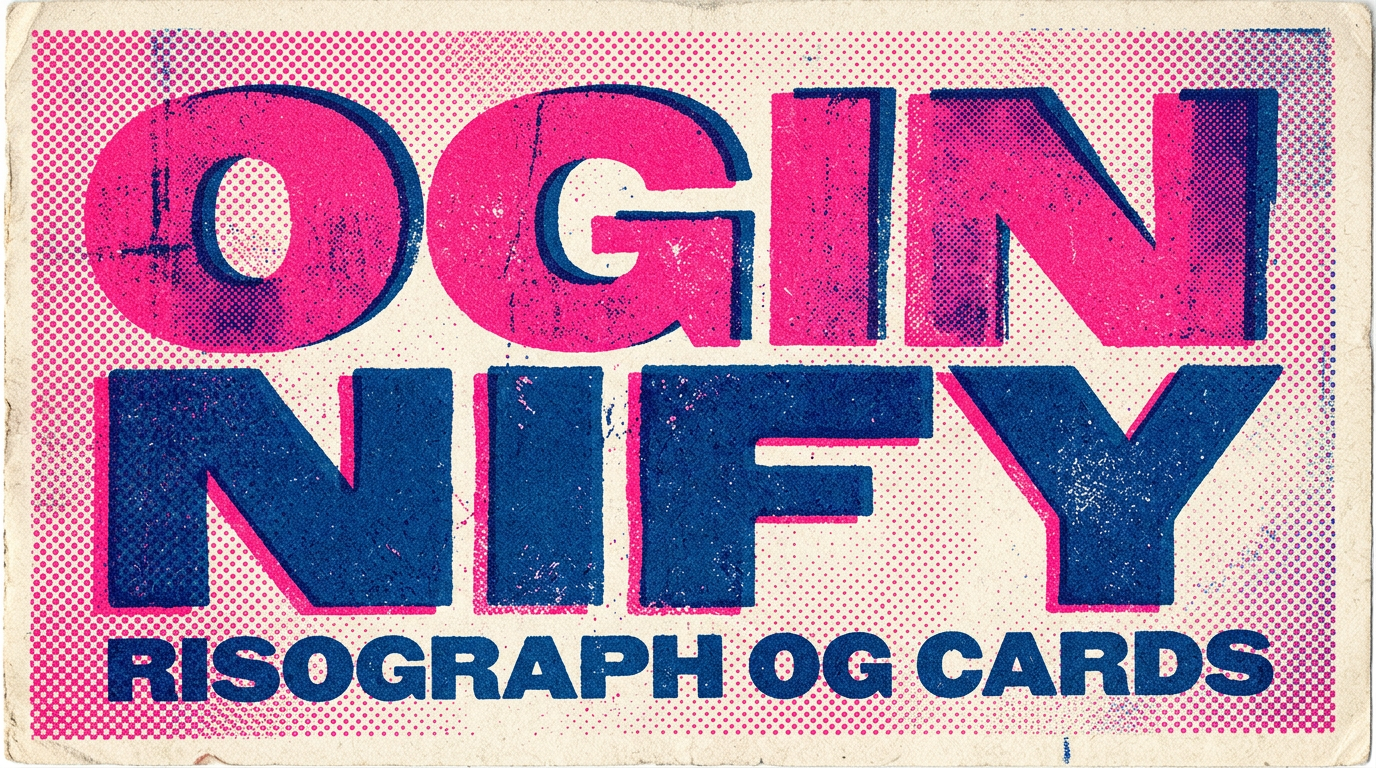
Risograph is a printmaking style, not a graphic-design trend — that distinction matters when you're choosing between it and neo-brutalist sticker pop. Below we cover what the two-pass halftone actually does, the studios and labels printing it, and why it lives in a different lane.
Two or three spot-colour passes (fluorescent pink / teal / yellow / federal-blue), each rendered as a coarse 32-60 LPI halftone, layers offset by 4-8px on purpose (the "misregistration" tell), a warm rough-paper background scan, slight ink-roller streaks at the edges, and a chunky display headline — usually a heavy grotesque or a slab serif — sitting on top of the colour passes.
Wieden+Kennedy's WK Lodge studio runs risograph for client one-pagers. Hato Press and Ditto Press anchor the look for the UK indie scene. Mansions Press, Knust and Risolab Stockholm all ship print-style social tiles. Brain Dead and Stüssy use a softer version on collab launches. Music labels like PAN and Erased Tapes use it on release covers.
Both feel hand-built, but neo-brutalist is digital-native flat-block stickers (cream paper, hard offset shadow, one accent sticker) while risograph is print-native ink-on-paper (rough scan, halftone dots, mis-registered colour passes). Pick risograph when the brand sells on craft / printmaking / music-label DNA; pick neo-brutalist when the brand sells on shipping product.
Studio · new release
Design studios that sell on craft need share cards that show the craft. A risograph launch card runs a two-pass fluorescent-pink + teal halftone of the product photograph over rough paper, with a chunky grotesque headline — the card reads as a printed studio poster, which is exactly what most studios want their website to be.
Manifesto · the case for
Cultural essays and printmaker manifestos benefit from a card that shares the medium of the message. A risograph card with a two-colour halftone illustration, deliberate misregistration and a stencil-style headline gives an opinion post the same authority a printed broadside has on a studio wall.
Release · OUT NOW
Independent music labels share releases over feeds where every cover looks the same (square photo + small wordmark). A risograph release card breaks that visual monotony — halftoned cover art, federal-blue overprinted on fluorescent pink, OUT NOW in a heavy slab — and reads as cassette / 7-inch sleeve rather than a streaming tile.
Portfolio · zine vol. 04
Indie publishers and print-zine portfolios live or die on whether the digital share card matches the printed object. A risograph card — halftoned cover crop, two-colour pass, rough-paper grain, chunky issue number — does that match in a single frame and reads as a zine cover, not a thumbnail.
Two-color print, misregistration, halftone grain — riso reads as intentional and small-batch.
Studio
The debut card is a fluorescent-pink and slate-blue overprint with the studio name in stencil — instantly not corporate.
Editorial about print, ceramics, small-batch anything reads truer with a riso card carrying the same aesthetic.
Zine
Indie zine-makers shipping small runs mint per-issue riso cards so the digital share matches the printed object.
Poster
Weekly poster series with per-drop riso cards earn recognizability the same way concert flyers do.
Riso cards fake the analog print process — misregistered layers, grainy fills, two-ink palette — so shares carry a print-shop warmth AI usually flattens.
Pick two from fluorescent pink, teal, aqua, gold, cornflower; overprint the two to fake the third. Two inks is the aesthetic constraint.
Nudge one color layer 2-3 pixels off-register; the misalignment is the tell that separates Riso simulation from flat two-color design.
Overlay a low-opacity paper texture and 5-8% monochrome noise; without the grain the ink layers read as vector, which breaks the illusion.
BrutalistSwiss minimalMagazine editorialTerminal / CLINeo-brutalistText overlayCinematicCollage
Risograph OG cards with 2-3 spot colors, halftone dots and mis-registered layers.
A digital emulation of risograph printing: 2-3 spot colors (usually fluorescent pink + teal + black, or similar), coarse halftone dot patterns, deliberate mis-registration between layers (colors don't align perfectly), and rough paper texture underneath. The style zines and small-batch printers use.
For design studios, music labels, indie publishers, small creative agencies, art-book publishers, and any brand whose audience actively values 'small-batch craft'. Skip risograph for anything at scale (mass-market consumer, enterprise SaaS) — the aesthetic contradicts the scale.
Perfectly Nice Studios, Colossal, Sublime (design studio), most Wieden+Kennedy print-flavored campaigns, plenty of indie music-label release pages, small poetry publishers, illustration agencies. Search their homepage HTML for og:image and you'll see the 2-color halftone pattern.
Risograph is a printing method — the visual signature is the halftone dots and mis-registration. Collage is a compositional style — layered fragments and tape strips. Magazine editorial is a layout system — serif headlines and gutter grids. A risograph card can use collage composition and editorial layout; they're orthogonal.
Yes when the halftone dot size is at least 8x8 pixels at 1200×630. Finer patterns turn into moire noise. The generator defaults to a coarse dot size specifically to survive Slack, X and LinkedIn thumbnail rendering — the 'printy' feel stays legible even at feed scale.
Yes. Pass primary and secondary hex codes; the generator uses them as the two spot colors and adds black as the third. Ink Cortez, Cheddar Yellow, Fluorescent Pink, Federal Blue and Mint are the five most common riso ink colors — worth naming those in your brief for authenticity.
Paste any page URL and Oginify generates four 1200×630 risograph cards in seconds — two-pass halftone, mis-registered layers, rough paper grain. A/B-ready, no signup.