
Issue drop
Anchor a Weekly Issue Cover
The magazine model works on OG: weekly issue, weekly cover, weekly share — the card is the tile everyone remembers.
Feature, opinion, interview and newsletter issues each get their own headline and hero frame — the unfurl carries the section flag instead of the site wordmark under every URL
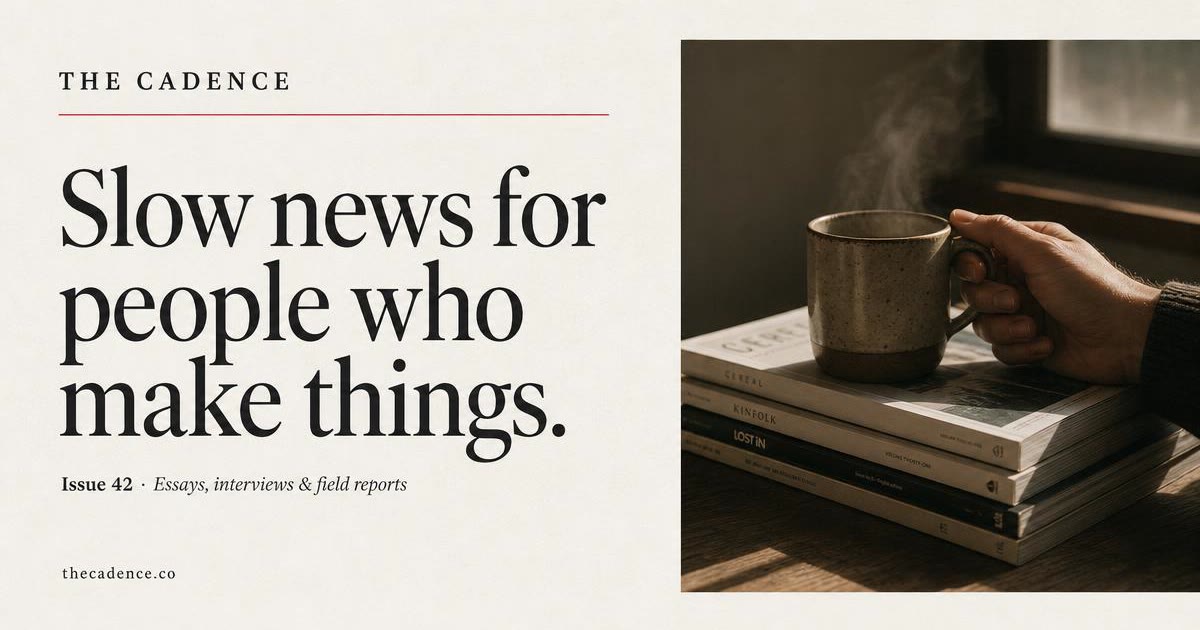
A long-form feature lives or dies on the first unfurl. Oginify pulls the headline, byline and cinematic hero image from the article, then renders a magazine-cover card with an oversized serif title — the shared link reads like a magazine cover on the newsstand, not a link stub.
Op-eds get shared as read this take — the author identity and the argument-in-a-line are what earn the click. Oginify renders an opinion card with a bold sans-serif headline, author avatar and a pull-quote — the same anatomy Stratechery and Substack columns use to travel.
Interview articles are shared for the subject as much as the publication. Oginify renders an interview card with a high-contrast portrait, the subject name and the Q that the piece opens with — earns the click because the subject IS the promise.
Every newsletter issue is a mini publication and every archive URL is a share candidate. Oginify renders an issue card with the wordmark, issue number, hero illustration and top-of-fold blurbs — matches the newsletter's own aesthetic so the archive link feels like the email itself.
News URLs live in the aggregator race. The card should read as editorial, not as SEO fodder.
Issue drop
The magazine model works on OG: weekly issue, weekly cover, weekly share — the card is the tile everyone remembers.
Voice
Editorial voice lives in the typography — the card is unmistakable from ten feet away when it uses the masthead face.
Homepage refresh
When the lead story changes at 8am, the homepage OG should follow — not lag six hours behind the actual front.
News and magazine sites live on the timeline; the difference between a click and a scroll is a card that reads editorially at 200 pixels.
Section chip, ISO date and H1 stack; that stack is the same trinity a print header uses and it works because readers already know it.
Real reportage art beats stock illustration for share-through; if no photo exists, ship a strong type-only card, never a mid-quality illustration.
Newsrooms rewrite headlines post-publish; re-running the article URL after an H1 change and swapping the image keeps the timeline preview honest.
E-commerce storesSaaS & B2BBlogs & newslettersPortfolios & personal sitesMarketplacesDocs sitesEvents & conferences
Answers to what publications actually ask before shipping per-article OG cards.
1200×630 pixels is the standard across every platform where an article gets shared. Oginify outputs exactly that per article.
Yes — every major publication (NYT, The Verge, Substack) renders per-article OGs because the headline in the card is what earns the click on the shared link. Generic homepage OGs kill referral CTR.
Oginify falls back to a typography-first card that treats the headline as the hero — big serif type on a brand-colored background. No article gets a bare unfurl.
The og:image and twitter:image can be the same 1200×630 asset. Every major platform accepts that ratio — one card, three platforms.
Paste any article URL and get four 1200×630 Open Graph cards tuned for features, opinion and interviews. No signup.